
Pilot's Sketch on Hotel Stationery Labeled Top Secret

The morning after two Eastern Airlines pilots nearly collided with something they couldn't identify, one of them sat down in his room at the Henry Grady Hotel in Atlanta and drew what he'd seen. On hotel stationery. The sketch looks like a rocket pointing down with exhaust coming from the rear, or more comically, a carrot with windows. The U.S. Air Force took that sketch, stamped it TOP SECRET, and buried it in a classified intelligence report for 78 years.
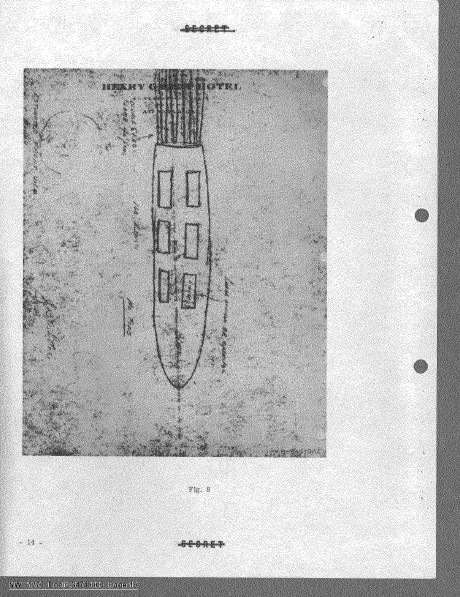
That drawing, and the report, surfaced July 10, 2026, in the fourth PURSUE UAP file release.
The document is Air Intelligence Report No. 100-203-79, dated December 10, 1948, jointly issued by Air Force Intelligence and the Office of Naval Intelligence. It is a formal military analysis of roughly 210 UFO incidents sourced from credentialed observers: USAF rated officers, Weather Bureau personnel, experienced civilian pilots and commercial airline technicians. The report's conclusion, in plain language, is that something real was being observed. The origin was unknown. The possibility of foreign involvement (meaning Soviet) was treated as a live national security concern serious enough to keep the whole thing locked down until now.
The July 1948 Eastern Airlines sighting sits near the center of the report. The pilots described a huge wingless craft, cigar-shaped, with what appeared to be two decks and rows of rectangular windows, moving at high speed and trailing what looked like exhaust. Both drawings, made on Henry Grady Hotel stationery, were reproduced as classified intelligence exhibits. The Air Force compared them to a matching sighting five days earlier over Arnhem, Netherlands.
A 1952 internal memo recommended keeping the study classified specifically because it contained "speculation on the possible origin" of the objects and details about Soviet capabilities. The document stayed buried for another 74 years after that.
Read the full story at U.S. Department of War, PURSUE Release 04, July 10, 2026
Hot Take: Nothing says "just weather balloons" quite like treating two pilots' doodles on hotel stationery as classified material.
Subscribe to our newsletter.
Be the first to know - subscribe today
Member discussion